Caring for Your Baby Dye Plant

Caring for Your Baby Dye Plant

I have to admit that this spring got away from me. It felt like January lasted a couple of years, and then one day I woke up and it was the end of April. So I whittled down the varieties of seedlings and just focused on some of my favorites. If you bought dye seedlings from me, you may have questions about how to care for them. Here are my growing notes, all in one place. 

2026 Seedlings

Balsam (Impatiens balsamina)

Plant in full sun or partial shade
2.5' tall x 1.5" wide

My family has grown balsam at every house we've ever lived at. When I was younger, my aunt used the flowers and leaves to dye my fingernails a poppy-orange color. I don't think I've ever thought about caring for the plant; it just always was. It's a singularly carefree plant, happily self-sufficient, self-seeding, and unbothered by diseases or pests. It doesn't tolerate super dry weather so make sure to keep it watered during periods of drought. 

Cotton (Gossypium barbadense)

Plant in full sun
2' tall x 2-3' wide

The variety I grew is called Pima Extra Long. Cotton plants are a little greedy--they need lots of sun, feedings, and regular watering. It can be grown in a large pot, as long as you feed it and make sure that the soil doesn't dry out. To feed my cotton, I use Osmocote fertilizer. The important thing about cotton is that it needs a long growing season (145 days) to develop bolls, so the sooner it's planted, the happier it'll be. In NJ, the only certainty about the weather is that it's unpredictable. If we have a long hot fall, the cotton will do great. If we have an early frost, that's the end of your cotton. But! Even if the plants are dead, you can continue to collect the unopened bolls and dry them out inside. As they dry, they'll continue to open.

Dyer's Chamomile (Anthemis tinctoria)

Plant in full sun
2' tall x 2-3' wide

This is a perennial plant, and once it's established, will be one of the most dependable growers in your garden. It does have a tendency to sprawl, but it's hard to be mad about it because it's such an easy and undemanding delight. Give it plenty of sun and keep an eye on it the first year to make sure it doesn't dry out in a drought, and it'll reward you with sunny little yellow flowers and leaves full of dye pigment. To keep the blooms coming all season, deadhead regularly. Which you would do anyway, to collect the flowers for dyeing.

Indigo (Persicaria tinctoria)

Plant in full sun
2-3' tall x 2' wide

The indigo I have for 2026 is persicaria tinctoria, a tropical indigo. It's a traditional Korean dye plant, with fields of it still growing in the southern region of Korea. It starts as such a tiny seedling but it's a vigorous plant. All it needs is sunshine and lots of water. It does well in the floodplains and I think it would be perfectly happy to grow in standing water. If your plant gets a little leggy, you can lay it down and sprinkle some soil over it to hold it down. Each node will produce a whole new stalk. As long as it doesn't have too much competition from weeds, it should reseed itself year after year. 

Madder (Rubia tinctorum)

Plant in full sun or part shade
1' tall x 2' wide

To be honest, madder as a plant is pretty underwhelming. Its leaves are like velcro and it grows like a weedy-looking groundcover. The roots are the real prize here. I think that this year, I'll try to coax it to grow up a trellis. To its credit, it doesn't require much from you other than time. Unlike most other dye plants, it will even be happy in part-shade. In 3 years, its roots will be ready to harvest. 

Scabiosa (Scabiosa atropurpurea)

Plant in full sun
2-3' tall x 1' wide

The Black Knight variety of scabiosa is a stunning flower with velvety deep purple petals in graduated sizes. It's not the most prolific bloomer, but regular deadheading helps. Each blossom is packed full of dye color. And the most remarkable thing about this scabiosa is that the color has respectable light- and wash-fastness.

Keep in mind that even if you don't follow all the recommendations, your plants will probably be fine. I don't follow my own recommendations! As hobbyists, the the joy is in the doing, not the product. And remember that there is always next year.
Continue reading

Thinking Like a Plant

Thinking Like a Plant

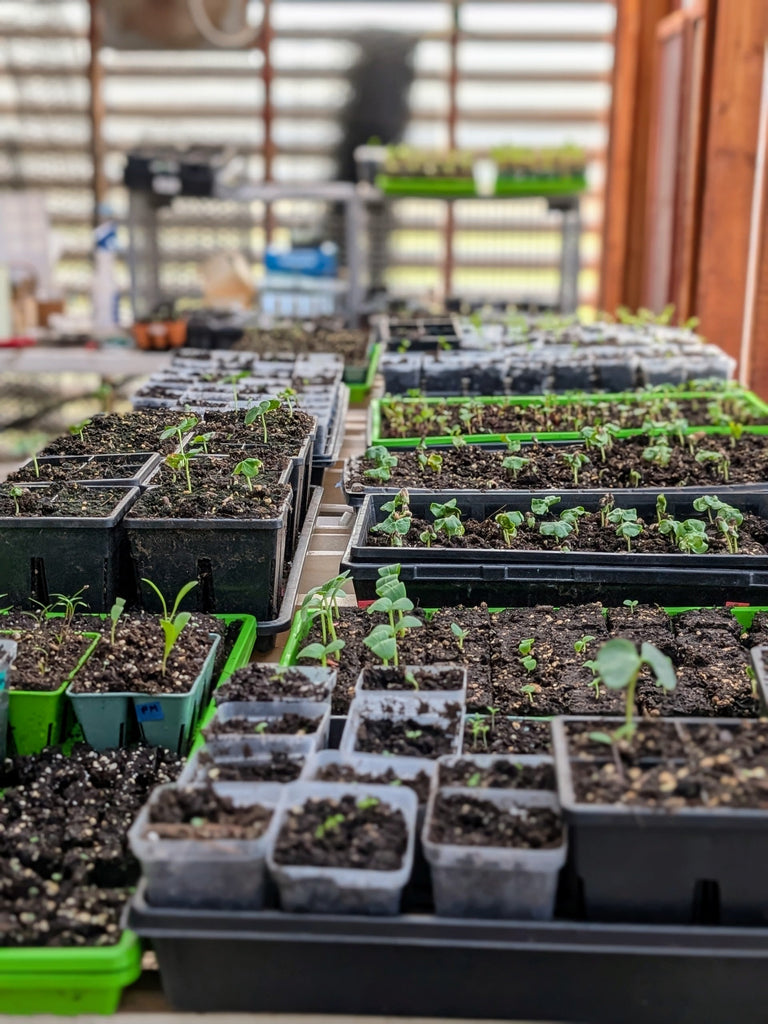
It's seed-starting season, and I've basically moved into the greenhouse. The excitement is almost unbearable. I'm up to 32 trays of seedlings and by the time I've done a round of peeping into each tray, I want to start all over again because another seedling just sprouted while my back was turned. 

I've been so focused on starting seeds that I've started to think like a seedling. Meaning, prioritizing my survival and optimizing the conditions for my growth. And when I say "my," I mean from the perspective of a seedling. Who knows. Maybe I should consider transferring those concepts to my actual human perspective.

The seedlings fall into 5 categories this year:

Dye & Fiber

  • Calendula: Pot Marigold and Orange Barrel Flashback
  • Cosmos, Tango
  • Cota Tinctoria (Dyer's Chamomile)
  • Cotton: Pima Extra Long, and Sea Island Brown
  • Eucalyptus
  • Indigo: persicaria tinctoria, indigofera arrecta, indigofera suffruticosa
  • Madder
  • Marigold, Giant Orange
  • Scabiosa, Black Knight

Cotton, Pima Extra Long

A forest of indigo (persicaria tinctoria) seedlings


Viola and Dyer's Chamomile. Which is which? Who knows! I'm waiting for them to reveal themselves with their true leaves.
Edible Flowers & Leaves
  • Basil, Genovese
  • Chamomile
  • Cilantro, Lemon
  • Dill, Thalia
  • Jewels of Opar
  • Lavender, French Long
  • Love in a Mist
  • Nasturtium
  • Viola

Harvesting edible flowers and greens for a tiny salad last summer

Mini Veggies

  • Burr Gherkin, West Indies
  • Cucamelon
  • Ground Cherry: Aunt Molly, Loewen Family Heirloom, Mary's Niagra
  • Peppers: Aji Cachucha, Baby Red Bell, Bequinho Red & Yellow, Liebesapfel
  • Tiny Tomatoes: Better Than Candy, Brad's Atomic, Red Ruby, Spoon

Tiny pickled peppers & cucamelons from last year

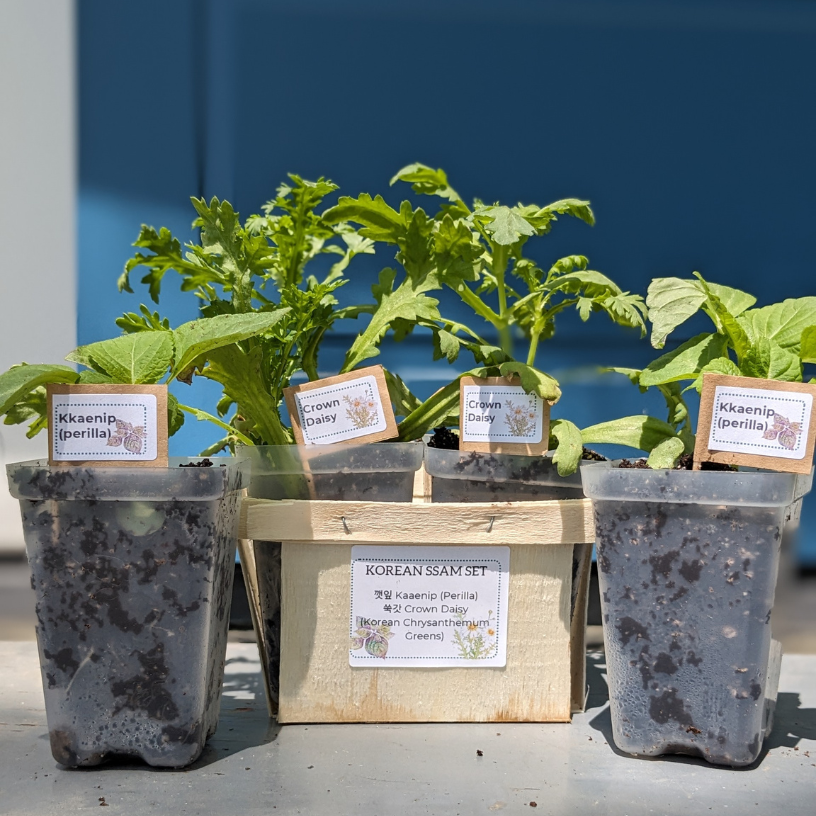
Korean Essential Veggies

Flowers For Happiness

  • Aster, Apricot
  • Clitoria Ternatea
  • Cosmos, Apricotta
  • Craespedia
  • Lavender, French Long
  • Nicotiana, Jasmine Scented
  • Poppy, Princess Victoria Louise
  • Snapdragon, Apple
  • Stock, Night Scented
  • Zinnia

And 1 (one) non-mini pepper, a variety called Jimmy Nardello's. I've been told by a trusted garden mentor that it's the most delicious pepper she's ever grown, so I have some high expectations. 

What am I doing with all these seedlings? I'll keep and grow some, but most of the dye seedlings will be going to the NJ Fibershed Harvest Initiative. The gardens are a new community project, fostering a grow-and-learn together collaboration of local fiber artists. 

I'll have seedlings available for sale at the April Open Studio/Farm Tour in a few weeks.


Last year's garden experience was an adventure in self-discovery. I learned that I don't really like to cook--I love to bake and I have a lot of fun garnishing dishes. And I found that I don't even really enjoy gardening. What I do love is starting and fussing over seedlings. So I'm hoping that most of these seedlings will find good homes and gardens to go to. And the plants I'm keeping? They're for what I enjoy the most: snacking and garnishing!


A tray of sunshine, a/k/a calendula seedlings


Continue reading

Hand sewing the Box Box Dress

Hand sewing the Box Box Dress
I decided to stitch the entire dress by hand. I mean, what else did I have to do? MDSW, which had been such a big part of my life for the past 10 years, was cancelled, and we had decided to cancel the NJ Fibershed Fiber Farm Market, which I'd spent the past several months organizing. NYC, and then parts of NJ, were crushed by tragedy. Stitching by hand provided me with something I could control, one very small thing amidst the maelstrom of fear, sadness, and anger. 
Continue reading

Creative Advocacy Networking Retreat

Creative Advocacy Networking Retreat
Last summer, I taught a freeform tapestry workshop at the New England Fiber Arts Summit, hosted by Wing & A Prayer farm in Vermont. A day or so into the retreat, I realized that it was my very first experience of teaching at an event where I was not the only BIPOC instructor. I had the pleasure of teaching alongside Marceline Smith and Sylvia Watts-Cherry, and it wasn't just their irresistibly charming personalities that made the retreat unforgettable for me. It was the fact that, at a time when conversations around bias and racism were coming to a head online and in my personal life, Marce, Sylvia, and I could talk about those issues freely--and fearlessly--with one another.
Continue reading

"Better living through science"

Natural dyeing is pretty much witchcraft. I don't know why anyone pretends otherwise. You forage for things in the fields and woods, and then boil everything in a cauldron of poison. My incantations run more along the lines of "horseshoe of iron and bark of crabapple" than "eye of newt," but you get the idea. 
Continue reading

The Hay Chronicles

The Hay Chronicles
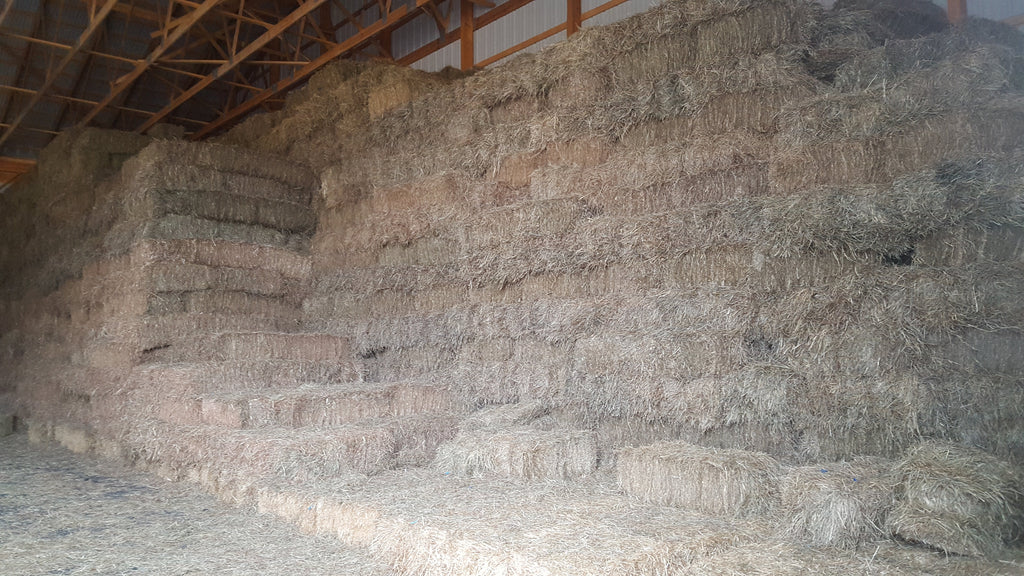
My sheep were disappointed with the hay I bought this fall. One of my neighbors had recommended the farm to me, and I called to order 70 bales. I was busy getting ready for Rhinebeck, so I didn't go look at it myself. As it was being unloaded into my hay storage, I wasn’t thrilled, but I didn’t want to complain. The sheep had no interest in it, and I thought maybe it was because there was still pasture. But even after 2 months, my sheep still wouldn't eat the hay. I grew increasingly worried about the coming winter, and having good nutrition for the ewes I want to breed.
Continue reading