I've been thinking about yarn lately. Don't laugh; I'm usually focused on the front end of working with fiber, so this is actually a departure. Abby Sarnowski (
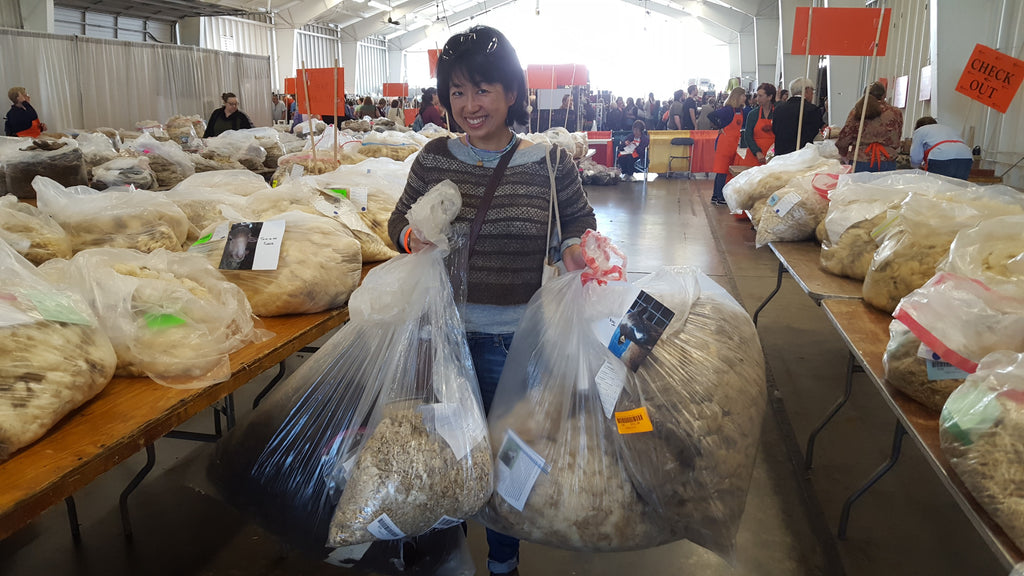
Folktale Fibers) and I share a booth at Maryland Sheep & Wool, and we like to pass the time by asking each other questions along the lines of, "how could we breed a miniature cormo sheep?" and "what breeds would you cross to spin the ideal sock yarn?"
On the long drive home, I mulled over what fibers I would blend to produce the ideal shawl or sweater yarn. The Shetland Islands has been a leitmotif in my life this spring, so when I envisioned shawls, I had haps in mind. Unlike the intricate lace wedding shawls that, according to tradition, were fine enough to pass through a wedding ring, hap patterns were written with a simple lace design and knit with a thicker yarn, for everyday wear.
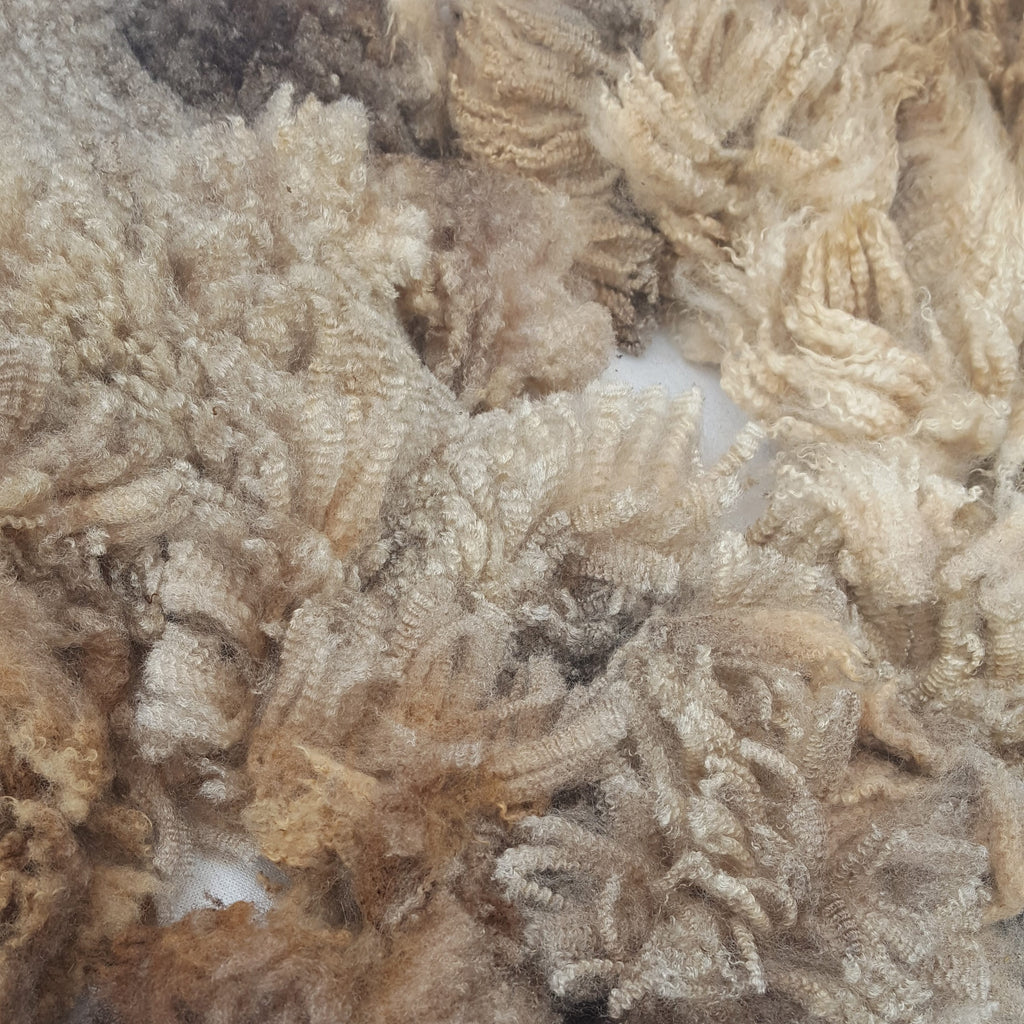
My yarn, I decided, would be lofty for warmth, durable--no wimpy pilling!, elastic because my hands are getting arthritic, and able to hold a lace pattern like a champ. The yarn would need to make a finished fabric that was lightweight, but have enough substance and body so that it didn't just puddle around my neck. And on top of all that, it needed to be soft enough for my sensitive skin.

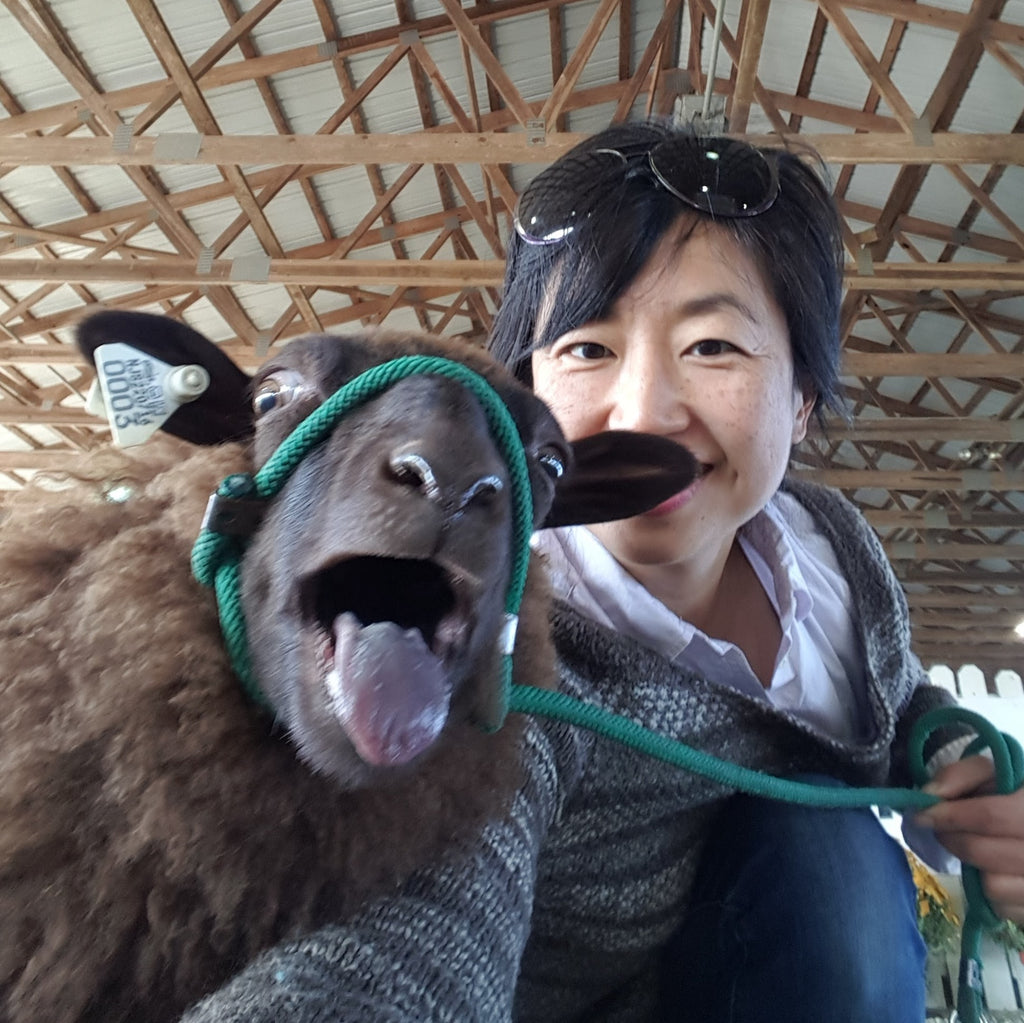
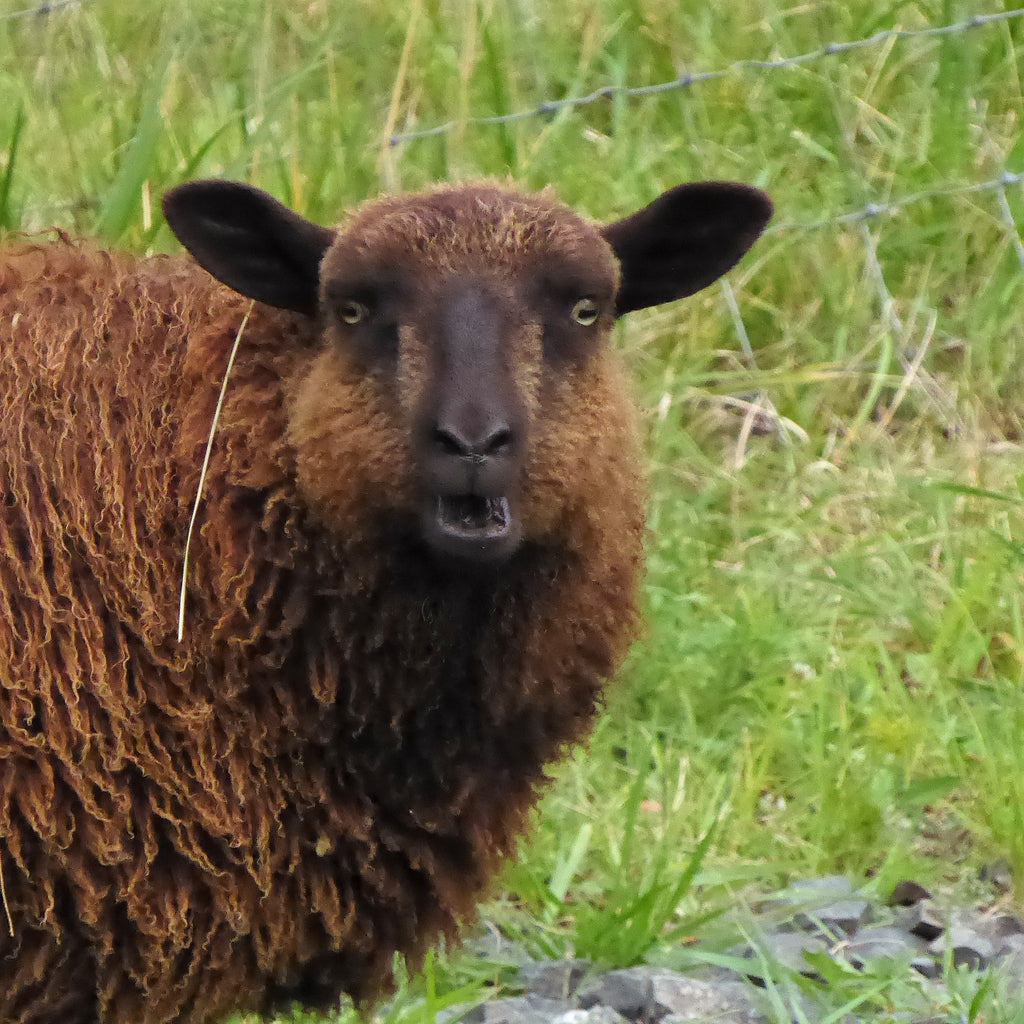
The more I thought about it, the more requirements I kept dreaming up for my yarn. I wanted to be able to hand-pick each fleece from sheep I knew personally (or at least knew the shepherds), and I wanted a range of natural colors. But natural colors with depth and tonal complexity. And the last thing? I wanted heaps and heaps of this wonder yarn, which meant that I'd getting it spun for me. So it needed to be a blend of fibers that could be processed by a small fiber mill, and still retain its homegrown roots.
When I got home, I started weighing, carding, and blending some fibers together.
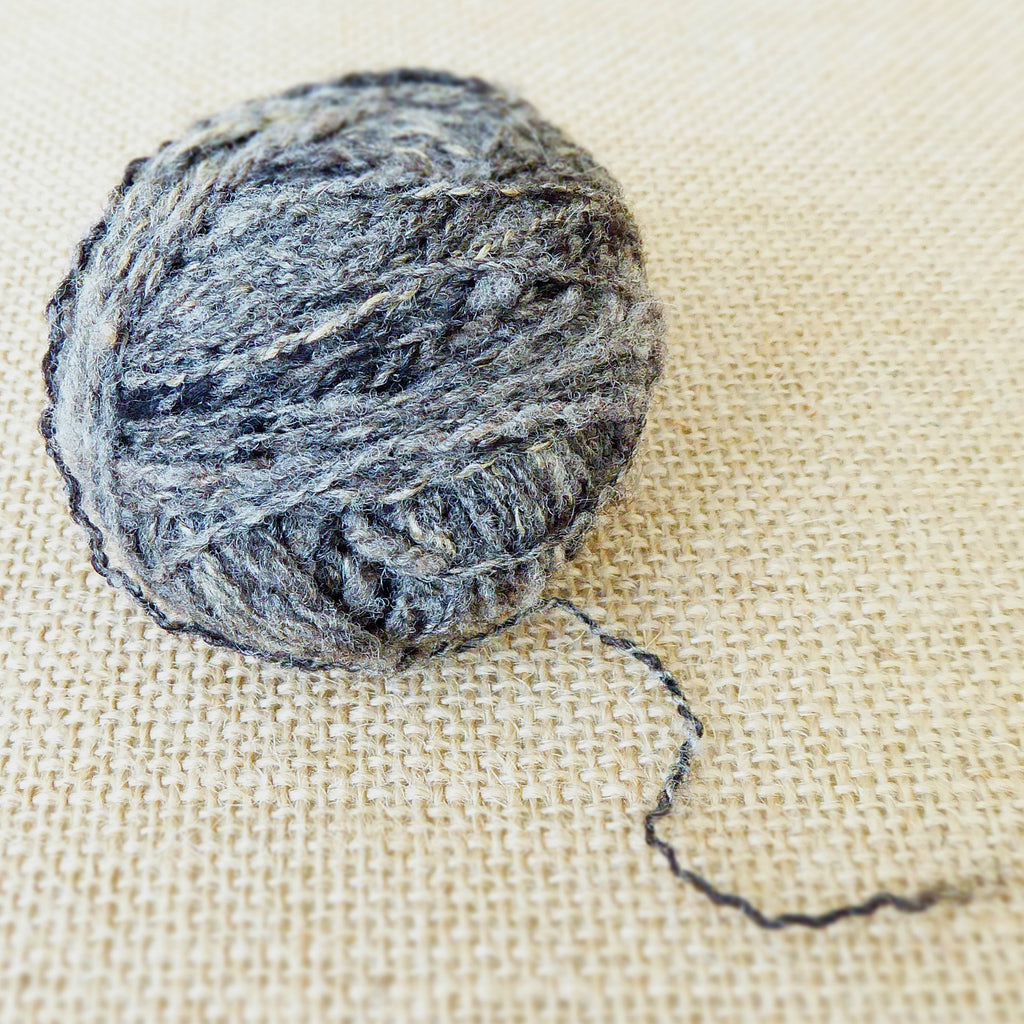
For weeks, I played with percentages and color combinations, and I spun and knit several test samples. I took the yarn with me everywhere, showing it to knitting friends and asking for feedback. It wasn't until I finished my Hansel Hap Shawl by Gudrun Johnston, and blocked it, that I was certain I got it right.
It was time to go mill shopping. I heard so many glowing recommendations for John and Lydia Piper at Gurdy Run Woolen Mill, and when I spoke with John, I could see why. I've never dropped off fiber to be processed before, and he was very patient about walking me through the process. We talked about the the fibers I'd chosen, and the best way to draft them individually and together. We talked about starting with a combination of combed top, carded roving, and raw fleece to end up with a yarn that had all the qualities I wanted.
Yesterday, I drove to Gurdy Run with my bags and bags of fibers. I met with Lydia, and we made the final decisions about colors, yarn weights, and put-ups. It was an incredibly educational trip.
The process of mill-spinning is both more high-tech and at the same time, more hands-on than I'd thought. Sure, the machines do the actual carding, drafting, and spinning, but it's not all one run-through. I didn't exactly think that John and Lydia just dumped fibers into a chute, tapped a few buttons on their laptops, and enjoyed iced tea on the porch while they waited for the machine to spit out skeins of yarn. What did I know? Not much, apparently.
The raw fleeces are washed by hand, and the carding, picking, pin-drafting, and spinning are each individual steps, requiring human oversight and adjustment. They handle the fiber between each stage, to weigh and evaluate what went in, and what came out. There's complex math involving weights and measurements, which Lydia explained and I nodded whenever I thought she needed the encouragement to go on.

There are cool gadgets like an air splicer (I want one!), but the skeining and tying are done by hand. I hope to go back for a visit on the day they're working on my yarn, and Lydia said if I'm lucky, she'll put me to work tying up the skeins. I can't wait.